
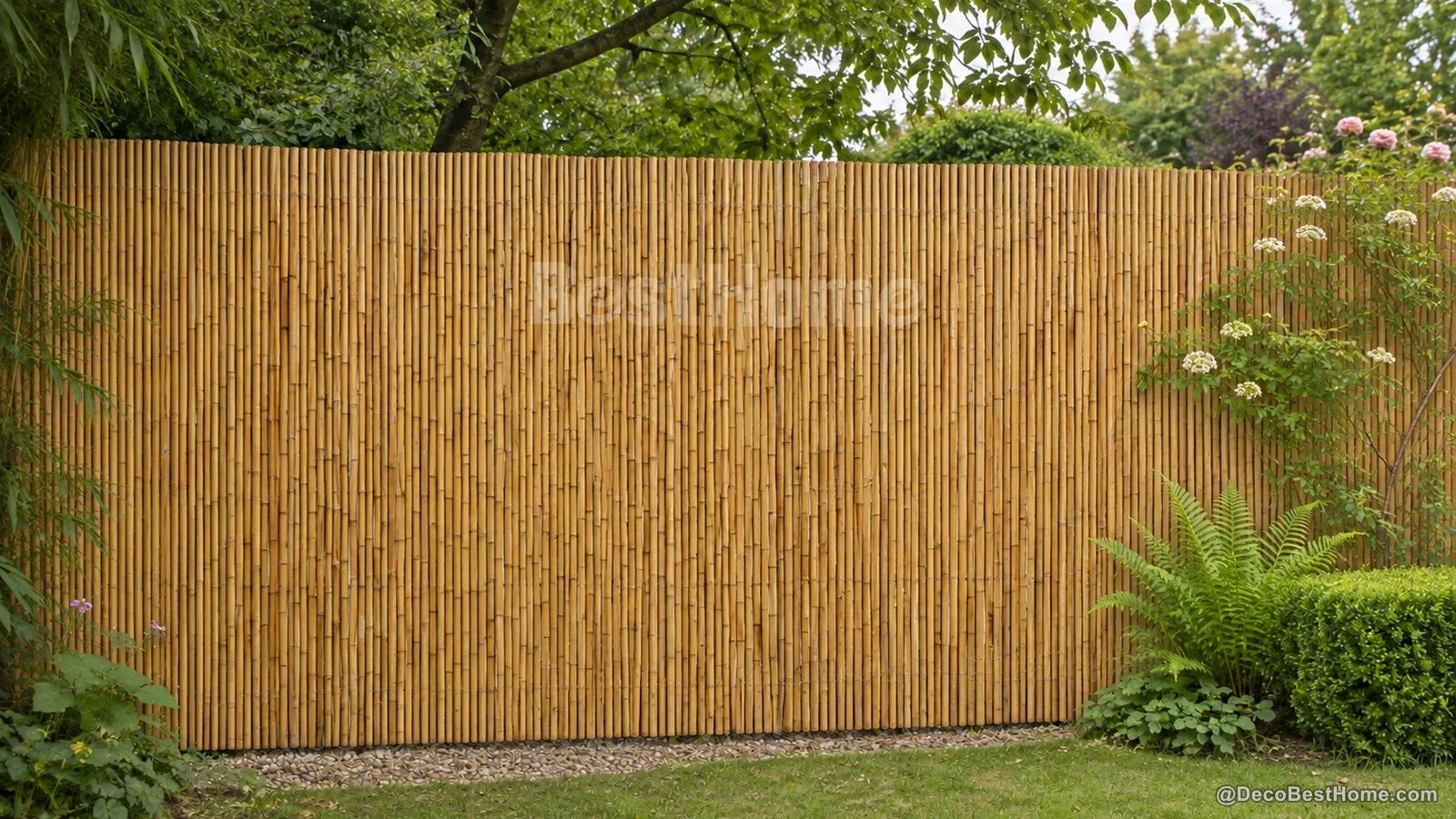
Most bamboo screening lasts several years outdoors, but the range is wide. Here is what decides its lifespan, and seven simple ways to make yours last longer.
Bamboo screening is one of the quickest ways to add natural privacy to a garden, balcony or terrace. The question buyers ask most before ordering is a simple one: how long will it actually last? The honest answer is "it depends", but it depends on a short list of things you can check and control.
The short answer
Rolled bamboo screening on an existing fence is commonly expected to last somewhere in the region of 3 to 8 years outdoors. Framed bamboo fence panels, which hold the canes more firmly and keep them off the ground, often last longer. These are typical ranges, not promises: the same roll can give long service in a sheltered spot and wear out much sooner on a wet, exposed boundary.
- Sheltered, well-drained and kept clean → towards the top of the range or beyond.
- Exposed to driving rain and standing on damp soil → towards the bottom.
- Thin canes, weak binding wire or poor curing → shorter, whatever the conditions.
What decides how long bamboo screening lasts
1. Moisture at the bottom edge
This is the single biggest factor. Bamboo copes well with rain that can drain and dry off; it suffers when it stays wet. A bottom edge resting on soil, in grass or in a puddle line stays damp for long periods, which is where softening and mould start. Most early failures begin at the base.
2. Exposure to sun and weather
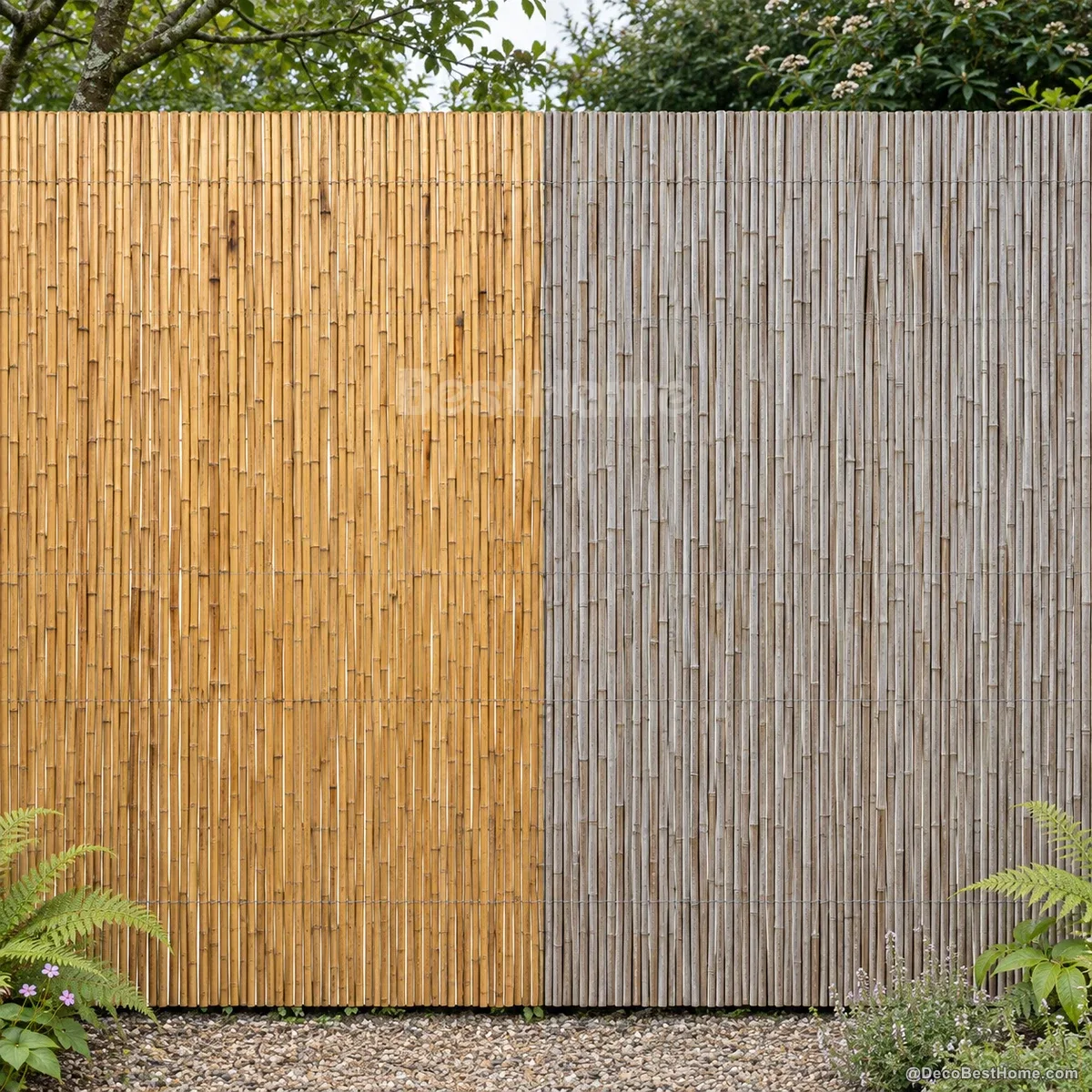
Strong sun gradually fades natural bamboo to a soft silver-grey and can cause fine surface checking. That is weathering, not failure. Wind matters more structurally: a screen that flaps against its fixings wears at the binding wire and the canes where they are tied.
3. Cane thickness and quality
Thicker, mature canes with solid walls handle knocks and weather better than thin, young canes. Proper drying and curing before the roll is made also matters: well-processed bamboo is less prone to splitting and mould than bamboo that was rolled while still green.
4. The binding wire
A roll is only as strong as what holds it together. Galvanised steel wire resists rust far better than plain wire or thin plastic-coated ties, which can break and let canes slip out long before the bamboo itself has worn. Our rolls are double-stitched with galvanised wire for exactly this reason.
5. How it is fixed
Screening fixed tightly along the top, middle and bottom to a sound fence or frame lasts much longer than screening held only at the top. Loose screening moves in the wind, rubs, and puts strain on the wire. The support behind it counts too: bamboo on a rotting fence will only last as long as the fence.
7 ways to make bamboo screening last longer
- Keep it off the ground. Leave a gap of around 5–10 cm between the bottom edge and soil, gravel or grass so the base can dry.
- Fix it firmly at several heights. Use galvanised wire, stainless staples or UV-stable cable ties along the top, middle and bottom, so the screen cannot flap.
- Let air move behind it. Avoid packing plants, compost or stored items tight against the screen, where they trap moisture.
- Clear leaves and debris. A quick brush-down in autumn and spring stops wet leaves sitting against the canes.
- Clean gently. Use a soft brush and mild soapy water, then rinse and let it dry. Avoid pressure washers, which can split canes and loosen bindings.
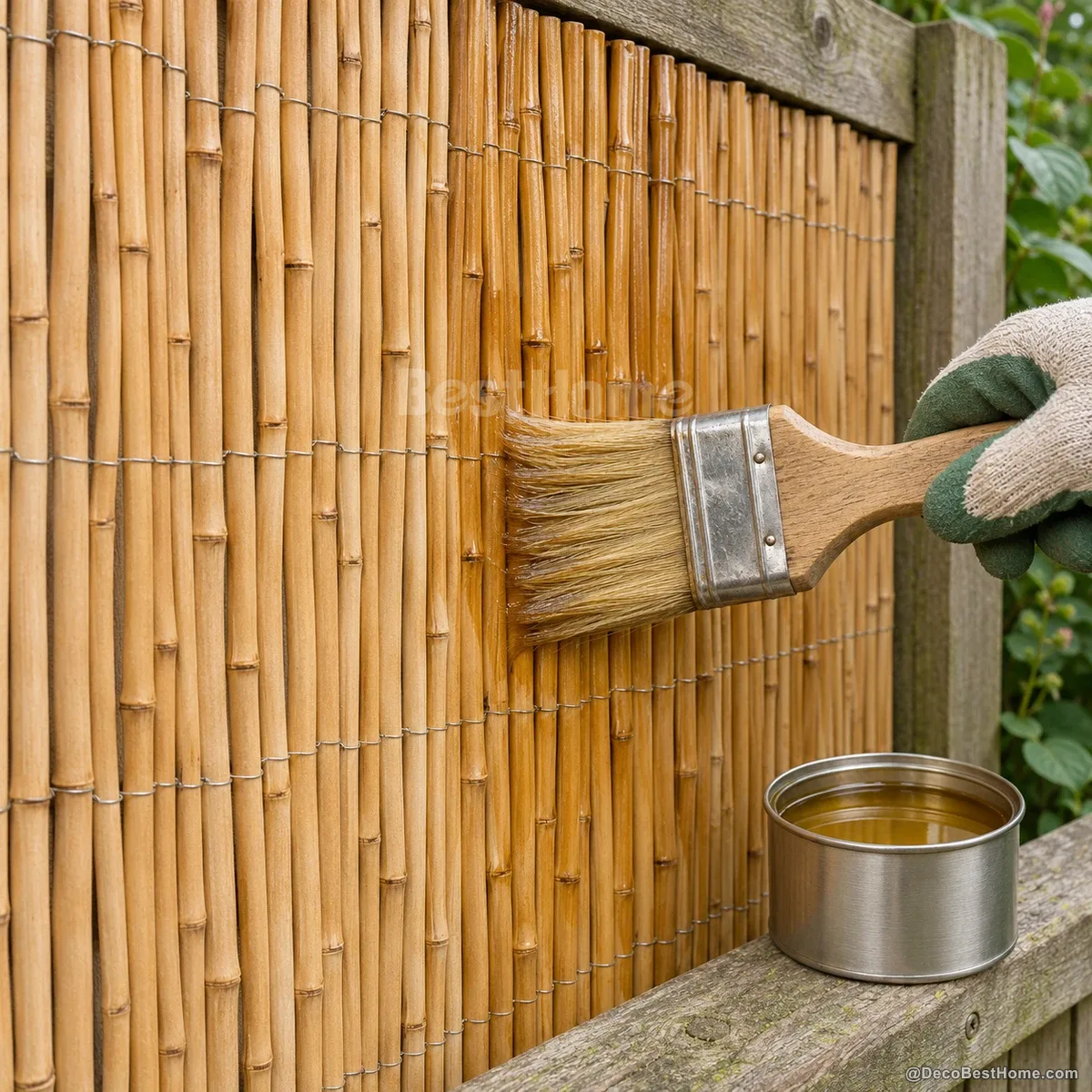
- Consider a protective oil or clear finish. An outdoor oil or finish compatible with bamboo can help reduce moisture uptake and slow fading. Test on a small area first and follow the product's instructions.
- Inspect after storms. Check fixings and wire after strong wind and fix small problems before they spread.
For a step-by-step cleaning routine, see our bamboo fence cleaning guide.
Does the colour make a difference?
Natural bamboo will weather towards silver-grey over time, which many people like. Natural black and carbonised bamboo get their colour from the material itself rather than paint, so there is no coating to peel; dark tones still respond to strong sun, but they tend to show weathering less. Compare the options in our bamboo screening colour guide.
Bamboo or reed: which lasts longer?
Bamboo generally outlasts reed, because its canes have thicker walls. Reed is lighter, softer-looking and usually less expensive, and it still gives good service when kept off wet ground. Our reed vs bamboo screening comparison covers privacy, looks and cost side by side.
When is it time to replace it?
- Canes feel soft or crumble when pressed, especially near the base.
- Binding wire has rusted through or snapped, and canes are slipping out.
- Mould keeps returning after cleaning and the canes have darkened right through.
- Gaps have opened up so the screen no longer gives the privacy you need.
Silvering, light surface cracks and a few loose ends on their own are normal weathering, not a sign the screen has failed.
See our bamboo fencing rolls →
Frequently asked questions
How long does bamboo screening last outdoors?
Typically several years. Rolled screening on an existing fence is commonly expected to last around 3 to 8 years, depending mostly on moisture, exposure, cane quality and how well it is fixed. Framed panels often last longer.
Do I need to treat bamboo screening?
It is not essential, but an outdoor oil or clear finish compatible with bamboo can help it resist moisture and fading. Keeping the bottom edge dry and the screen well fixed matters more than any coating.
Why has my bamboo screening gone grey?
Sun and rain naturally weather bamboo to a silver-grey. It is a surface change, not rot. A light clean and an oil finish can bring back some warmth; a carbonised or natural black finish shows it less.
Does bamboo screening rot?
Bamboo can soften and decay if it stays wet for long periods, which is why the bottom edge usually goes first. Lifting it off the ground and allowing airflow behind it are the best defences.
Supplying a garden centre, retailer or landscaping project? We ship natural bamboo fencing rolls factory-direct by the container, in natural, carbonized and natural black, with custom heights and private label welcome.
Choosing the format first? Our bamboo fence buying guide explains rolls, panels, privacy and installation.
Keep reading
More from the journal
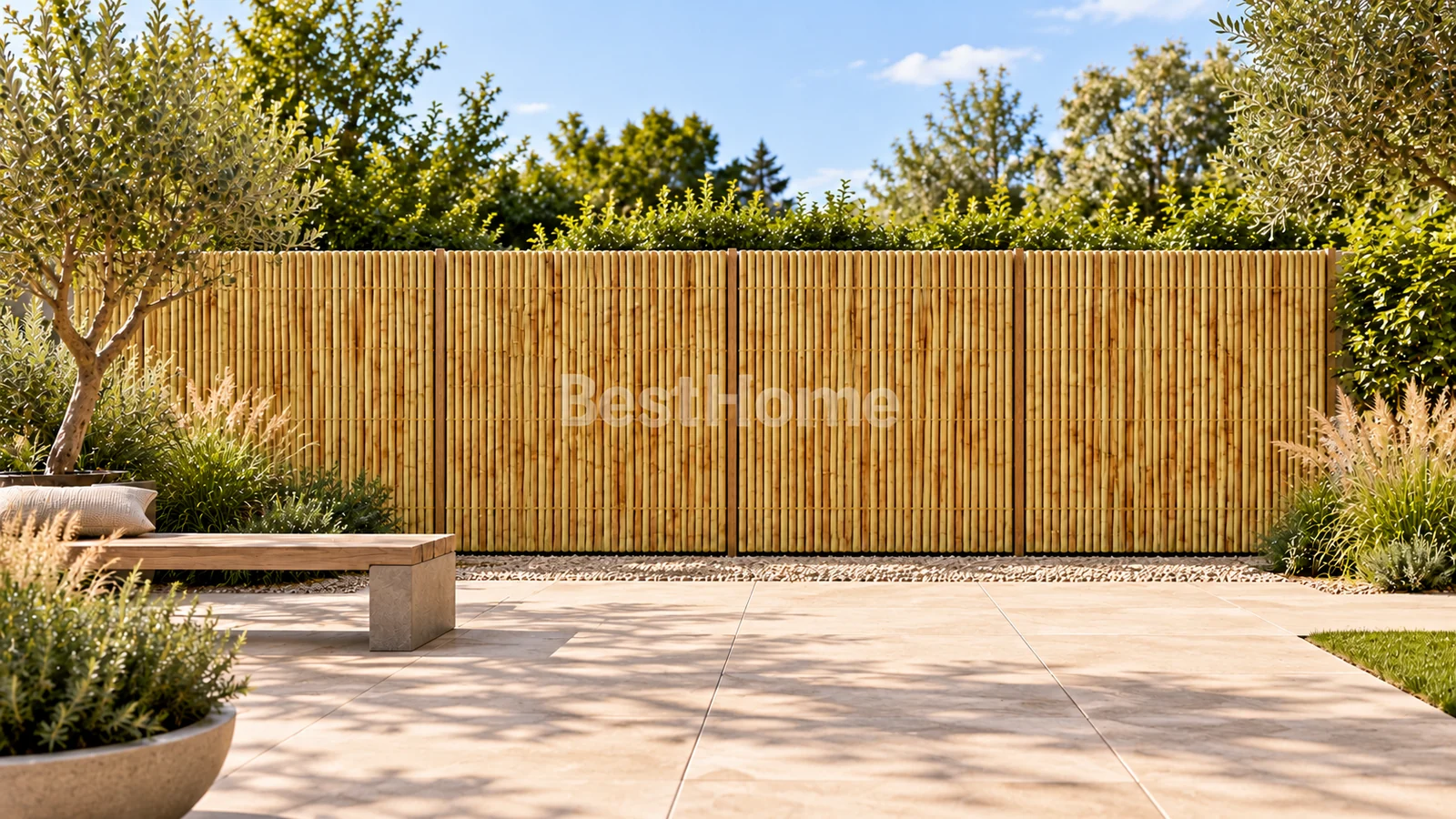
Bamboo Fences: Types, Privacy, Installation and Care
Compare bamboo fences, screening rolls and panels. Learn what affects privacy, installation, outdoor durability and buying specifications for your project.
Reed Fencing Grades Explained: 3–6, 5–8 and 8–10 mm
Stem thickness is what decides privacy, price and lifespan. A straight guide to the three reed grades, peeled versus unpeeled, and which one to order.
The Best Reed Fence You Can Buy: Extra-Thick Peeled Reed 8–10 mm
Extra-thick peeled reed, 8–10 mm stems woven at maximum density into a fully closed screen — up to 100% privacy and the most premium reed fence we make.
Have a project in mind?
Let's source the right natural materials for it.
Tell us what you're building and we'll send specs, samples and a factory-direct quote.
Not ready to quote? Start with the 2026 wholesale brochure — the full range with sizes, specs and OEM options, sent straight to your inbox.
Or reach us directly: sales@decobesthome.com+86 180 5926 5951