
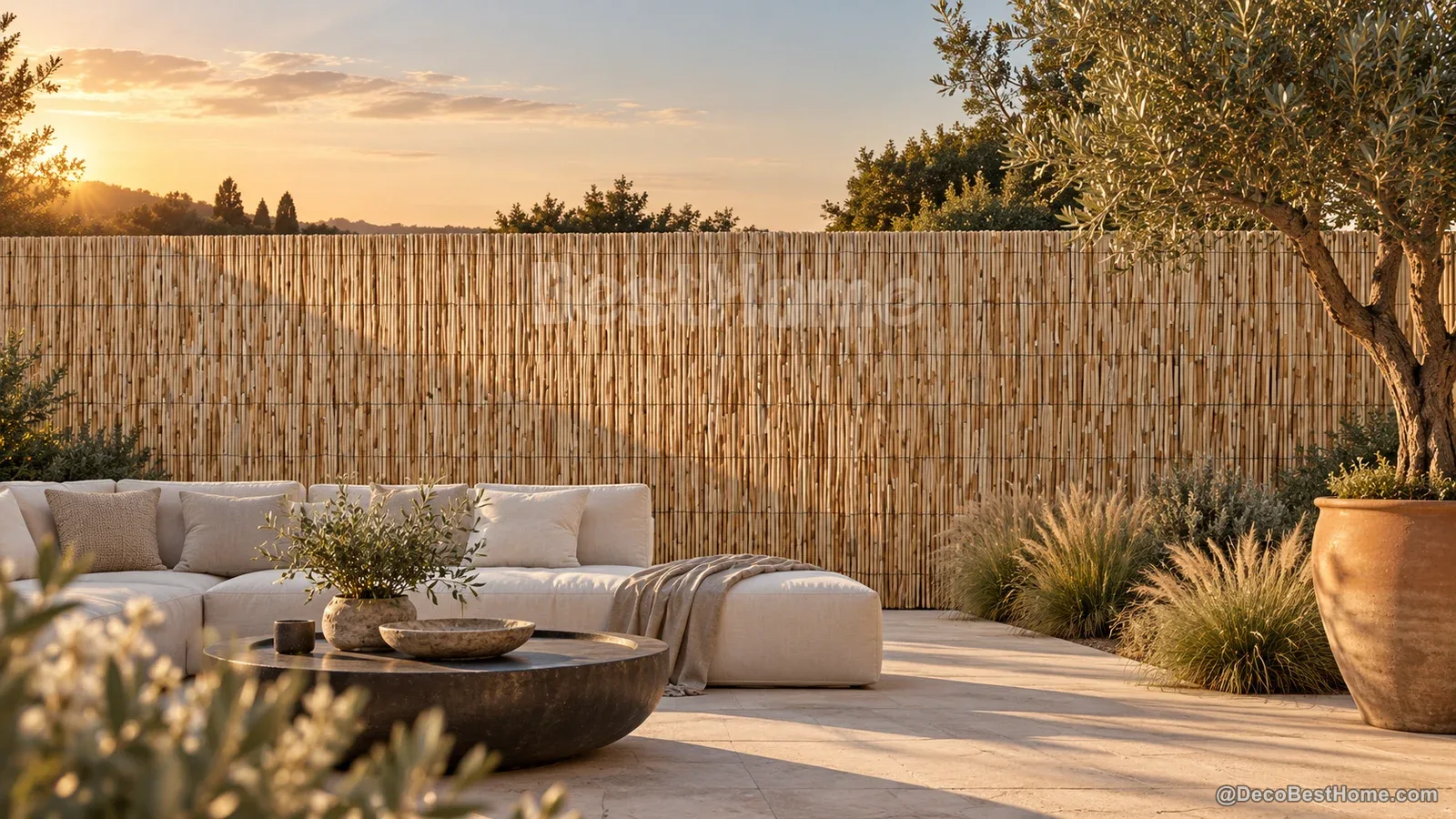
Extra-thick peeled reed, 8–10 mm stems woven at maximum density into a fully closed screen — up to 100% privacy and the most premium reed fence we make.
Not all reed fencing is the same. The difference between a screen you can still see through and one that closes a garden completely comes down to two things: how thick the stems are, and how densely they are woven. Our extra-thick peeled reed fence — 8 to 10 mm stems, woven at our highest density — sits at the top of that range. It is the most private and the most premium reed screen we make.
What “extra-thick” actually means
Reed is graded by the diameter of the stem. Fine reed at 3–6 mm is the budget grade: light, inexpensive, and open enough that you still catch light and movement through it — roughly half the view is closed. Thick reed at 5–8 mm closes around 90%. Extra-thick reed at 8–10 mm is a different material altogether. The stems are substantial, almost like slim canes, and at our highest weaving density they sit hard against one another with nothing left in between.
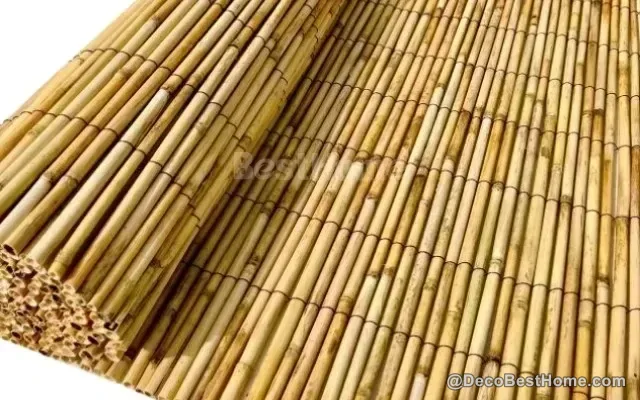
That extra diameter does two jobs. It fills the screen — and it gives the fence body. It hangs straight, feels solid in the hand, and does not ripple or sag across a long run the way a fine reed roll can.
Up to 100% privacy — a closed natural wall
Installed, this grade gives up to 100% privacy. There is no view through it in either direction, and no shifting gaps as the light moves round during the day. What you end up with is not a screen with a pattern in it. It is a wall — a warm, pale, natural wall that happens to be made of reed.
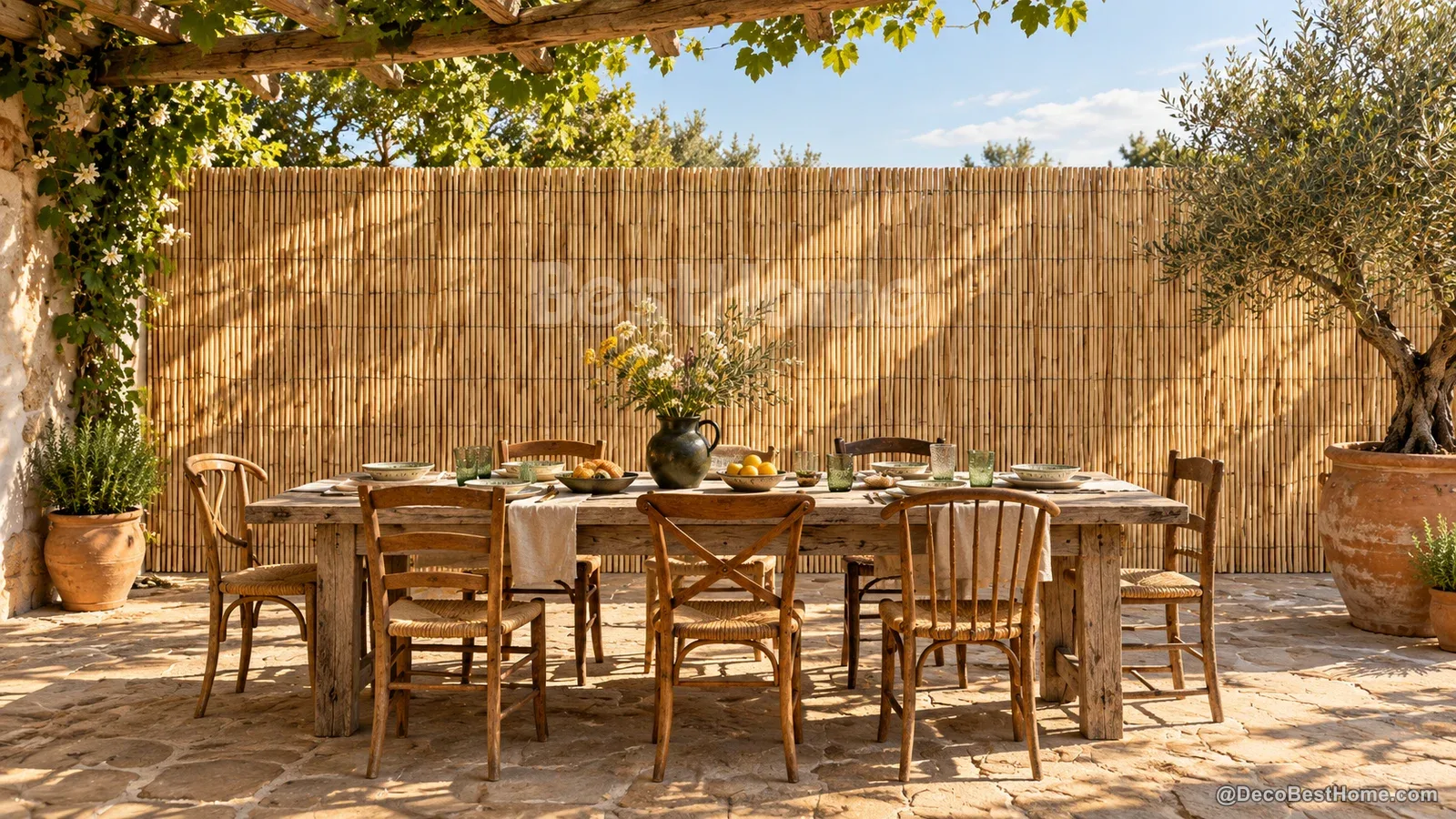
This is the grade to choose when privacy is not a nice-to-have but the entire point of the job: a terrace overlooked by a neighbouring window, a pool you want to use without an audience, a restaurant courtyard that has to feel enclosed.
Peeled, not unpeeled — why the finish matters
Peeled reed has had its outer skin removed. What is left is a smooth, clean, pale blond stem with an even colour and a refined surface. Unpeeled reed keeps the skin: slightly rougher, a little more mottled, more rustic — and a little cheaper. Both last the same, both resist mould, and neither has any smell.
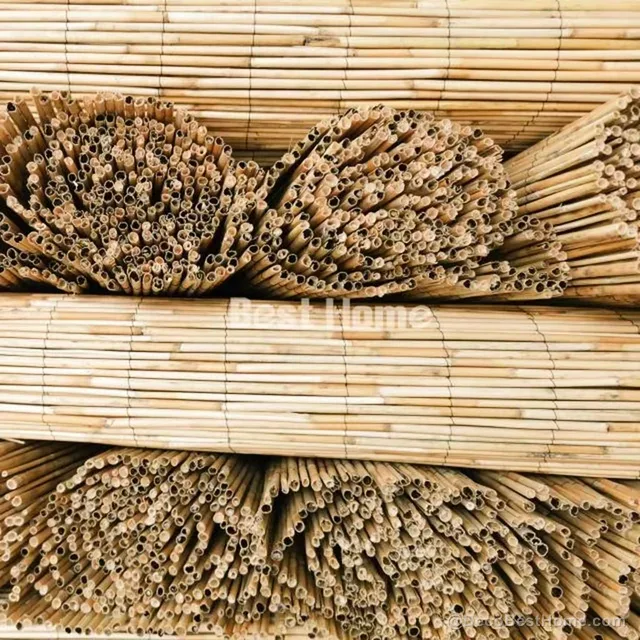
For a premium job, peeled is the one. The uniform pale tone reads as a deliberate material choice rather than as garden screening, and it sits comfortably against white render, limestone, dark steel and glass. That is why this grade turns up on architect-led terraces and hotel projects far more often than the rustic grades do.
Where the top grade earns its price
Reed is a wetland plant, so damp is its natural home. Salt air, pool chlorine, permanent moisture and coastal wind do not trouble it — which makes the extra-thick grade a natural fit around water. It is one of the very few natural screens we would put beside a pool without hesitating.
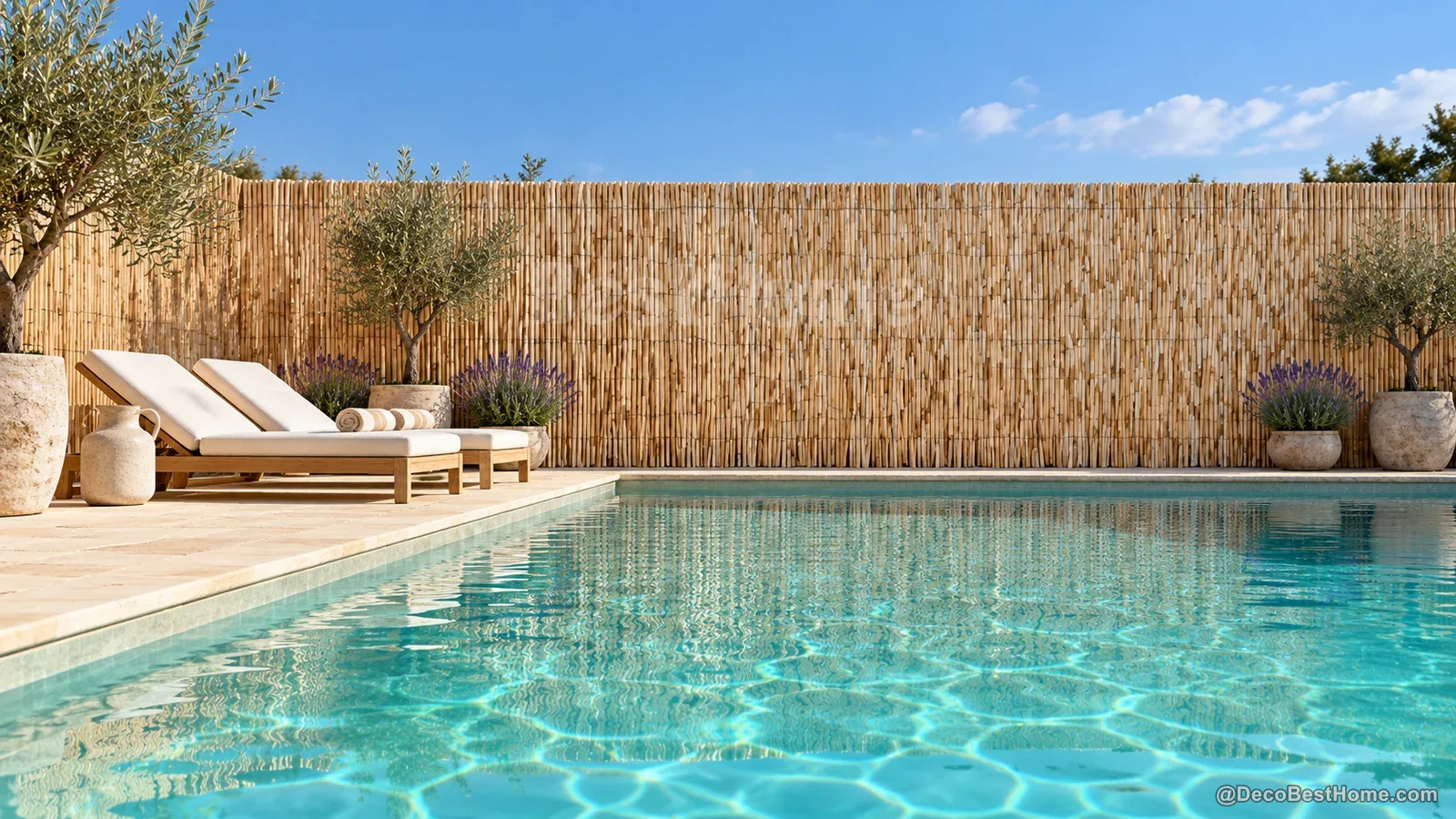
Under a pergola it does the other half of the job as well. With the sun low, a fully closed reed wall stops the glare coming in from the side that a roof alone cannot — and turns a dining terrace into a room.
Rooftops, balconies and city gardens
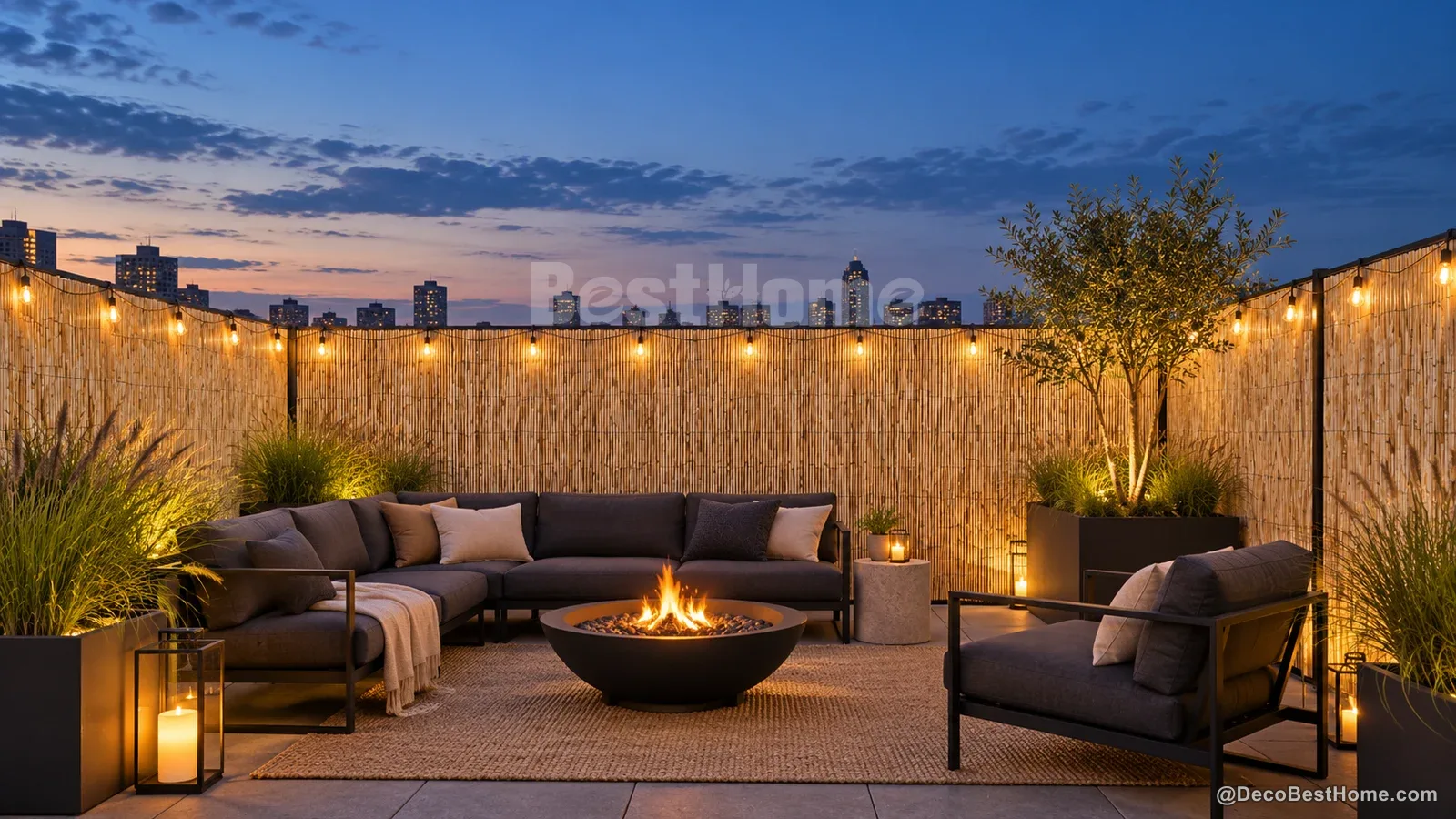
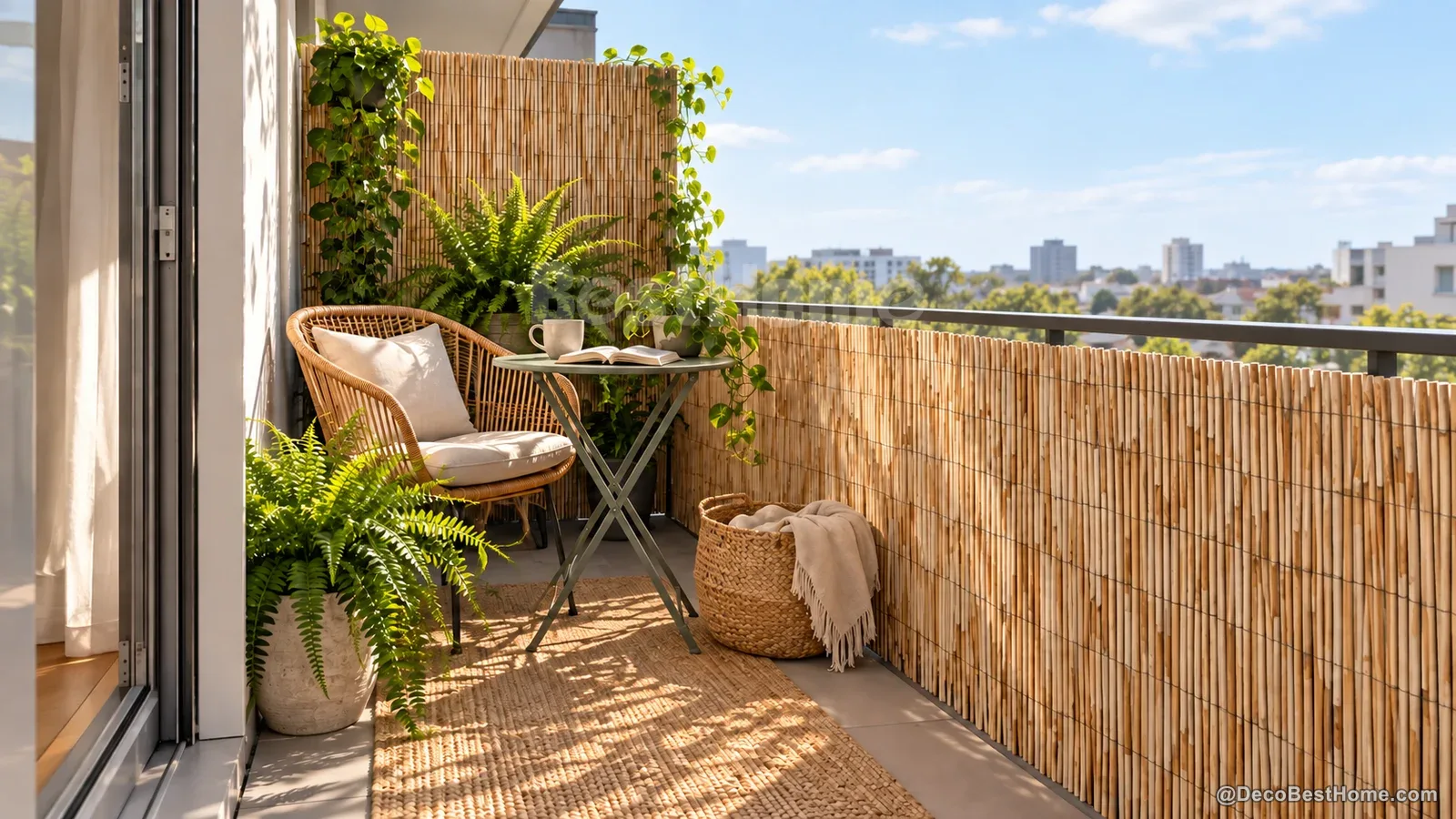
In the city the value is different again. Reed is extremely light, so it can be fixed to a balcony railing or a rooftop balustrade where a timber or composite screen would be too heavy — needing structure, and often permission. Reed goes up on the railing you already have, and the terrace is private the same afternoon.
Fitting: light enough to hang on what you already have
- Work against an existing structure — a wire fence, a timber post-and-rail frame, a balcony railing or a simple batten grid.
- Unroll the screen along the run and fix the top edge first, keeping the stems vertical and the top line level.
- Fix every 30–40 cm along the top, then the bottom, then the middle, using UV-stable cable ties or galvanised binding wire.
- Keep the tension even — pull it snug, but not tight enough to bow the stems.
- At joins, butt the rolls edge to edge rather than overlapping, so the seam disappears.
- Leave a small gap at ground level so water drains away and air can move behind the screen.
Specifications
- Material: 100% natural peeled reed
- Stem diameter: 8–10 mm
- Weave: black plastic-coated wire
- Privacy: up to 100% — fully closed
- Lifespan outdoors: 3–5+ years
- Format: rolls · custom heights and lengths
- Packing: four retail-ready options
- MOQ & OEM: negotiable · private label welcome
- Loading port: Tianjin, China
See the extra-thick peeled reed fence →
Frequently asked questions
Is 8–10 mm reed really 100% private?
Up to 100%, yes. It is the most closed screen in our reed range — once installed you cannot see through it. The budget 3–6 mm grade closes roughly half the view and 5–8 mm around 90%, and that is the gap people notice immediately when they compare the grades side by side.
How long does it last outdoors?
At least 3–5 years in a normal European garden, and often longer in a sheltered spot. The natural pale colour changes very little over that time — reed weathers far less visibly than untreated timber.
Is it safe beside a pool or on the coast?
Yes. Reed grows in water, so chlorine spray, salt air and permanent damp are not a problem for it. Poolside, coastal and waterside positions are where this material is genuinely at its best.
Peeled or unpeeled — which should I order?
Peeled for a clean, uniform, premium look; unpeeled for a rustic natural-yellow character at a slightly lower price. Lifespan, density and mould resistance are identical, so the choice is purely appearance and budget.
Can I get custom heights and lengths?
Yes — we make this grade to size, and it ships as compact rolls with four retail-ready packing options. Private label and OEM packaging are welcome.
How heavy is it?
Very light for its size. Reed is one of the lightest natural fencing materials there is, which is why full-height rolls can be hung on an existing fence or railing without extra posts or a supporting frame.
Supplying a garden centre, DIY chain or landscape trade? We produce extra-thick peeled reed fencing at our own factory and ship it by the container to wholesalers across Europe, the USA and Japan — wholesale and OEM welcome.
Keep reading
More from the journal
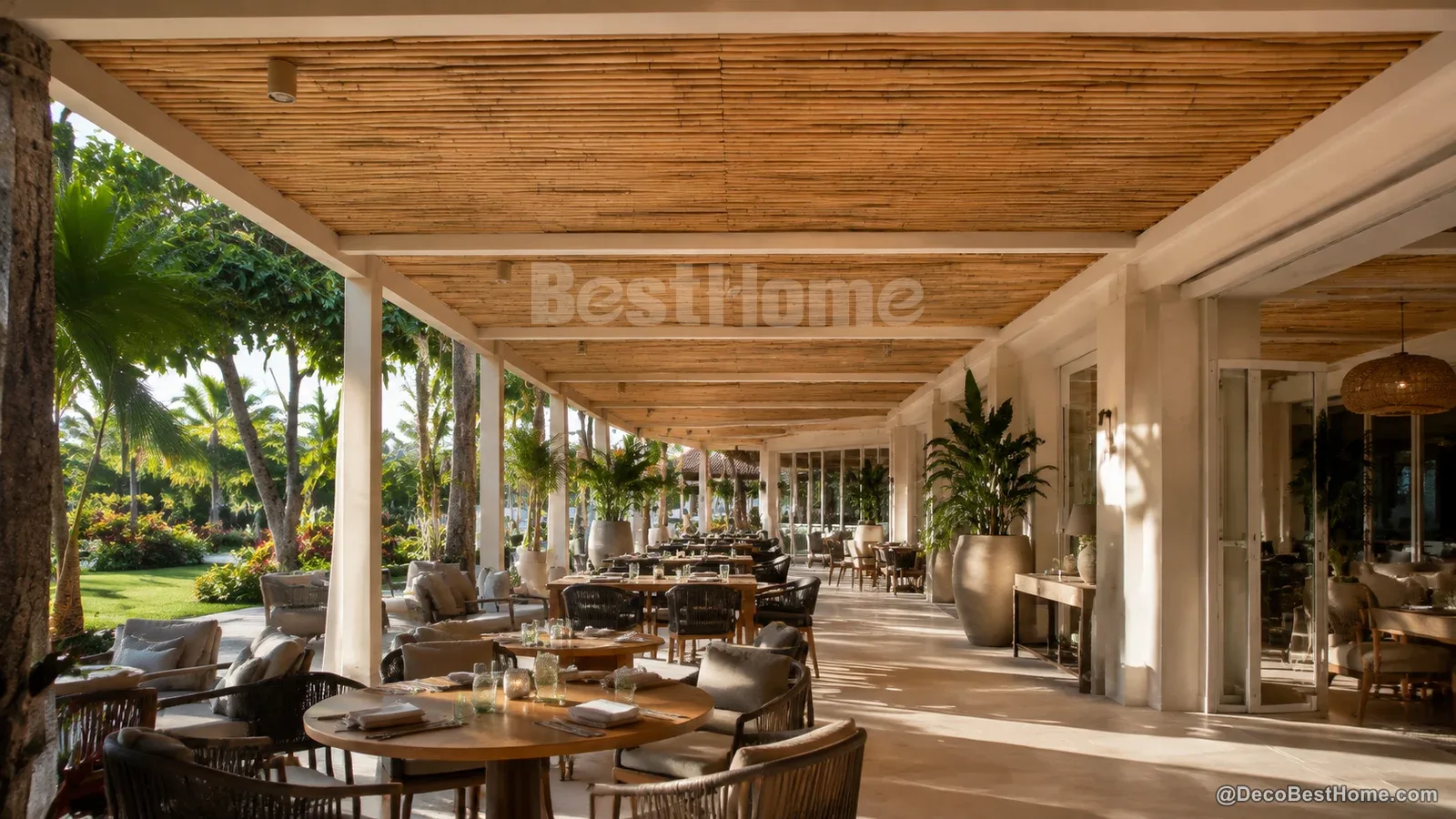
Natural Bamboo Fence Rolls for Ceilings: Natural False Ceilings, Best Choice, Done Beautifully
Bamboo mat rolls make warm, natural decorative ceilings and false ceilings — for restaurants, bars, resorts, terraces and lobbies. Here's how.
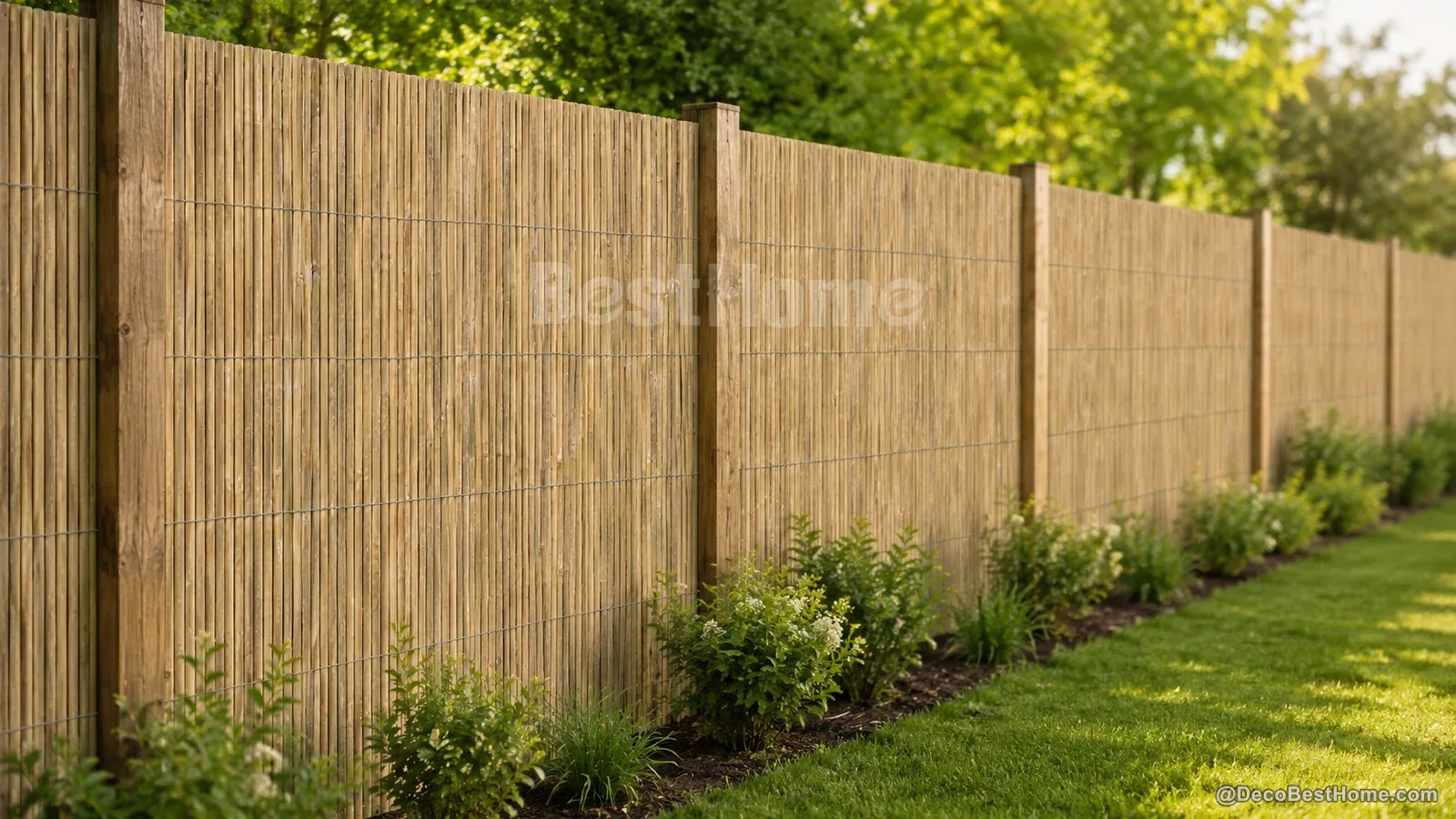
Split Bamboo Slat Fencing: A Clean, Natural Privacy Screen
What split bamboo slat fencing is, how it differs from round-cane screening, the sizes, and how to put it up — a refined, natural way to get instant privacy.
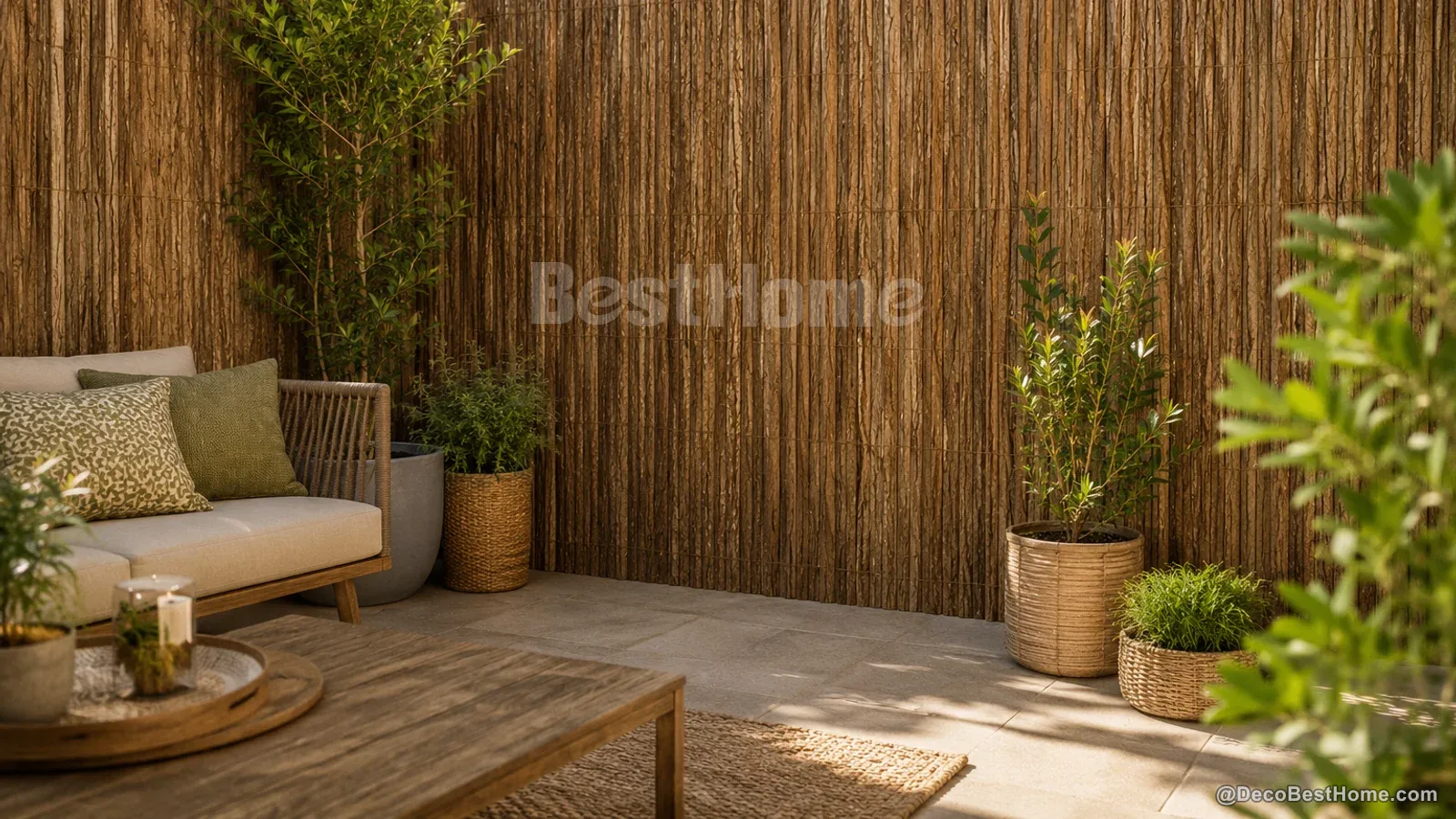
Bark Screening: Rustic, Natural Privacy for Your Garden
What bark screening is, how it looks and lasts, and how to put it up — the warm, woodland way to get instant garden privacy.
Have a project in mind?
Let's source the right natural materials for it.
Tell us what you're building and we'll send specs, samples and a factory-direct quote.